“Shining as Lights in the World”
(Philippians 2:14)
The canons of St. Peter’s Anglican Cathedral, your pastors in the Lord Jesus, to all the people of this cathedral parish: Grace and peace to you from God our Father and the Lord Jesus Christ.
Our Lord Jesus Christ has called his Church to proclaim the Gospel “in season and out of season” (2 Timothy 4:2), and this means that the Church bears her witness in the face of both acceptance and opposition and persecution. Our Lord has also placed his Church in human history with its crises, fears, disasters, and sinful opposition to the designs of God. The Church places her hope in no human political order but in the reign of the Lord Jesus Christ. As the Catechism of the Anglican Church in North America (ACNA) teaches, our hope is placed on one conviction: “Ruling with his Father in heaven, Jesus Christ is Lord over the Church and all creation, with authority to equip his Church, advance his kingdom, bring sinners into saving fellowship with God the Father, and finally establish justice and peace upon the earth” (Question 73).
The murder of Charlie Kirk has brought sadness, anger, fear, and despondency to the lives of many Americans. This latest act of senseless and malicious violence appears to be part of a growing willingness on the part of people at both ends of the political spectrum to use violence, intimidation, and incendiary rhetoric to achieve political ends. Within recent memory, we have seen violence directed at the President, two Minnesota state legislators, the Governor of Pennsylvania, and a Supreme Court justice, to name a few incidents. Additionally, there have been multiple school shootings. The increased willingness to use violence in the service of social and political objectives is taking place at a time in which the social, cultural, and political fabric of this country seems to be fraying and, perhaps, tearing.
Many thoughtful people have put forward explanations for these developments, and we would do well to consider them. However, as Christians it is vital that we allow our faith to shine a light on our situation to reveal the full truth of it, truth which secular explanations will not notice. We live in a secularizing and post-Christian society, but this does not mean that belief has completely disappeared from our culture. Quite the contrary. The faith which we should place in God alone is being placed in political parties, ideologies of radically different sorts, and in social causes. Scripture refers to this as idolatry and makes it clear that our political, social, and culture idols are counterfeit gods. In the context of teaching on the Second Commandment, the Catechism of the ACNA reminds us that an idol is whatever we place our ultimate hope in other than God (Question 279). The Catechism is clear on how idolatry affects us. To worship and serve idols is to be become empty and alienated from God (Question 282). As Scripture also makes clear, people who are empty and alienated from God are also fearful and inclined to do almost anything to achieve what they believe to be necessary. As Christians we know that the only solution to our idolatry driven violence, hatred, and cynicism is national repentance. We should also know that our own need for repentance is continual.
How we respond to this situation is not a question of partisan politics or social media punditry. The decisive question facing us is this: What kind of witness will we bear in this situation? As Christians, we are not free to respond to hatred and violence directed against us with our own hatred and violence. To do this is to bear no witness at all and to abandon the Gospel. We do not need to wonder about how we should respond to hatred and hostility because Scripture provides us with a clear direction. In Romans 12:14, 17-19, Paul gives this command: “Bless those who persecute you; bless and do not curse them…. Repay no one evil for evil but give thought to do what is right in the sight of all. If possible, so far as it depends on you, live peaceably with all. Beloved, never avenge yourselves, but leave it to the wrath of God.”
Instead of being frightened, or angry, or defensive, we need to recommit ourselves to the mission of the Church, which is to evangelize, to teach, and to incorporate sinners into the community of Jesus Christ, the only community that will last into eternity. In the end, all human politics will be supplanted by the politics of the Kingdom of God. In Philippians 2:14 Paul admonishes us to “shine like lights in the world,” not to add to its darkness.
In Matthew 5:21-26 Jesus extends the Sixth Commandment from being a prohibition of murder to being a prohibition of hatred and anger, recognizing that there is a connection between the two. In its teaching on the Sixth Commandment, our Catechism makes it clear how we are to keep it: “As a witness to the Gospel and a follower of Christ, I can also keep this commandment by forgiving those who wrong me, patiently refraining from ungodly anger and hateful words; defending the unborn, vulnerable, and oppressed… and seeking the well-being of all” (Question 316). At this moment in time, we can bear a powerful witness by not allowing ourselves to become drawn into the spiral of fear, anger, recrimination, and ugliness.
At this moment in time, Paul’s words in Philippians 4:4-7 seem to speak directly to us: “Rejoice in the Lord always; again, I will say rejoice. Let your reasonableness be known to everyone. The Lord is at hand; do not be anxious about anything, but in everything by prayer and supplication with thanksgiving let your requests be made know to God. And the peace of God, which surpasses all understanding, will guard your hearts and your minds in Christ Jesus.”
The Book of Common Prayer, 2019 is a wonderful resource which includes prayers for many occasions and concerns. Prayer #44 “In Times of Social Conflict and Distress” is particularly appropriate to our situation and should be included in our daily prayer pattern:
“Increase, O God, the spirit of neighborliness among us, that in peril we may uphold one another, in suffering tend to one another, and in homelessness, loneliness, or exile befriend one another. Grant us brave and enduring hearts that we may strengthen one another, until the disciplines and testing of these days are ended and you again give peace in our time; through Jesus Christ our Lord. Amen.”
Given this fourteenth day of September in the year of our Lord Jesus Christ 2025 and to which we have affixed our signatures:
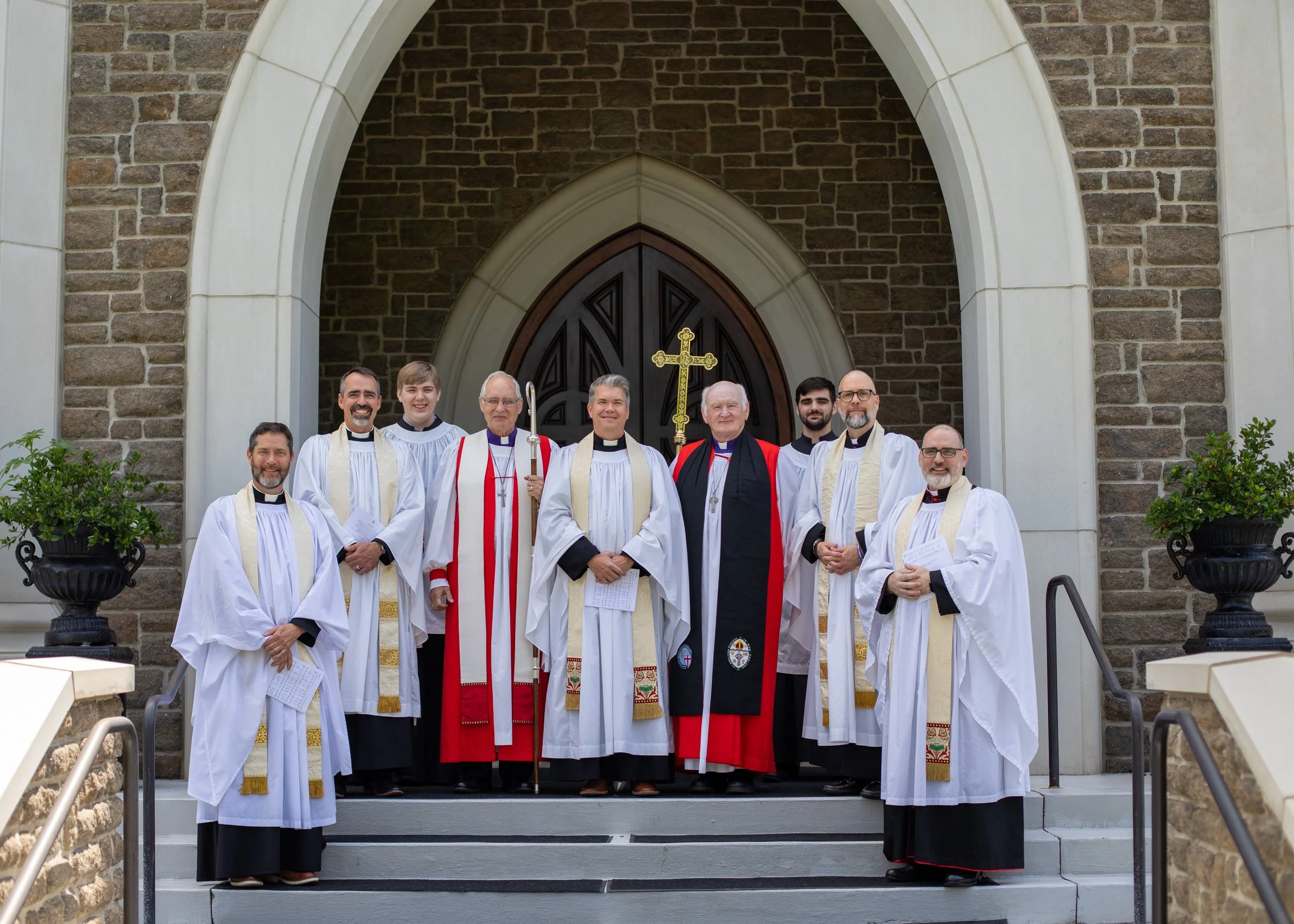
The Rev’d Canon Dr. Michael Petty, Acting Dean
The Rev’d Cap’t Herb Bailey, Canon for Missions and Evangelism
The Rev’d William Krizner, Canon for Pastoral Care and Family Ministry
The Rev’d Canon Dr. Jonathan Kanary, Canon for Spiritual Formation and Discipleship
Mr. Christopher Garven, Canon Precentor